
 Adhesives
 Coatings
 Flooring
 Primers
 Remedial
 Sealants
 Accessories
 Waterproofing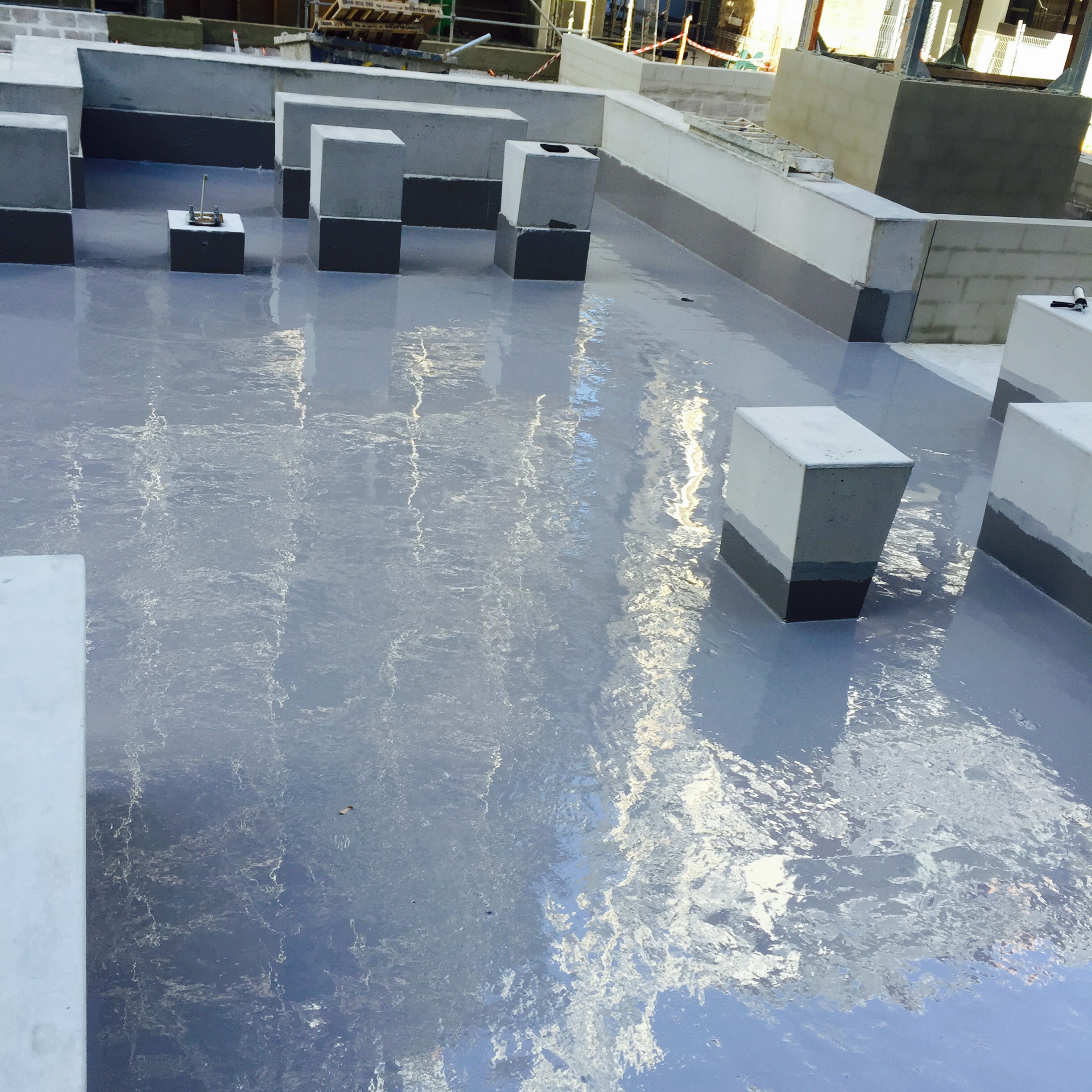
It Passed the Flood Test. Is the Waterproofing System Ready to Cover?
Why short-term watertightness is only one part of waterproofing quality assurance.
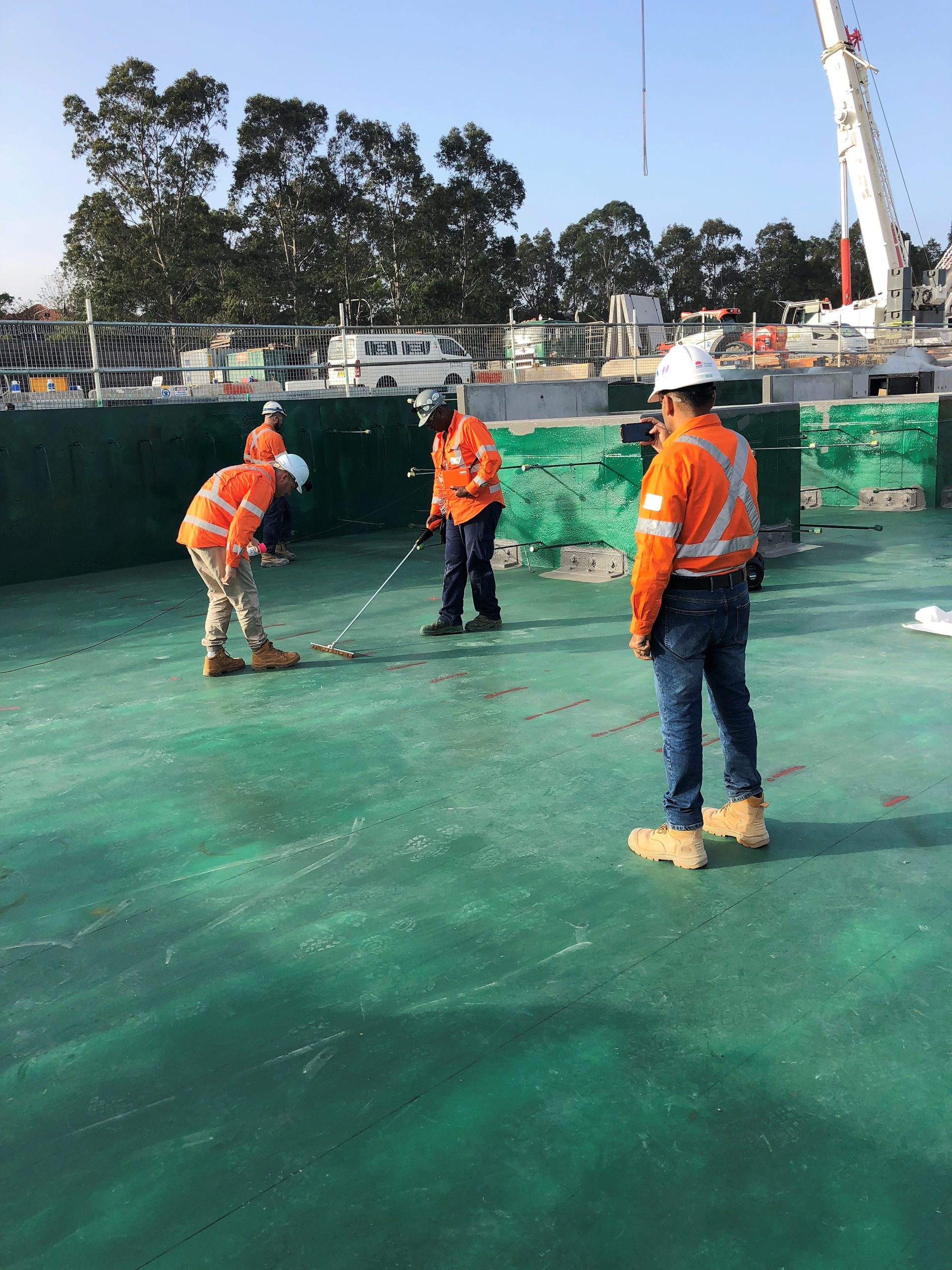
A podium membrane has been completed. The drains are temporarily sealed, the area is filled with water and no leakage is visible below.
The flood test has passed.
Within days, the membrane may be concealed beneath screeds, pavers, pedestals, drainage cells, landscaping, planter boxes or trafficable finishes. Once that happens, direct inspection becomes difficult and repairs become progressively more disruptive.
The critical question is therefore not simply:
“Did the membrane pass the flood test?”
It is:
“Do we have enough evidence to confirm that the complete podium system is ready to be permanently covered?”
What a flood test can demonstrate
A correctly planned flood test can provide useful evidence that a completed horizontal waterproofing installation remained watertight under a temporary head of water during the test period.
ASTM D5957 provides an established guide for flood testing horizontal waterproofing installations. It recognises the need to consider membrane curing, water depth, test duration and the structural loading created by retained water.
This makes flood testing a valuable project-specific quality-assurance measure.
However, a successful test primarily demonstrates short-term watertightness under the conditions present at the time. It does not independently confirm:
-
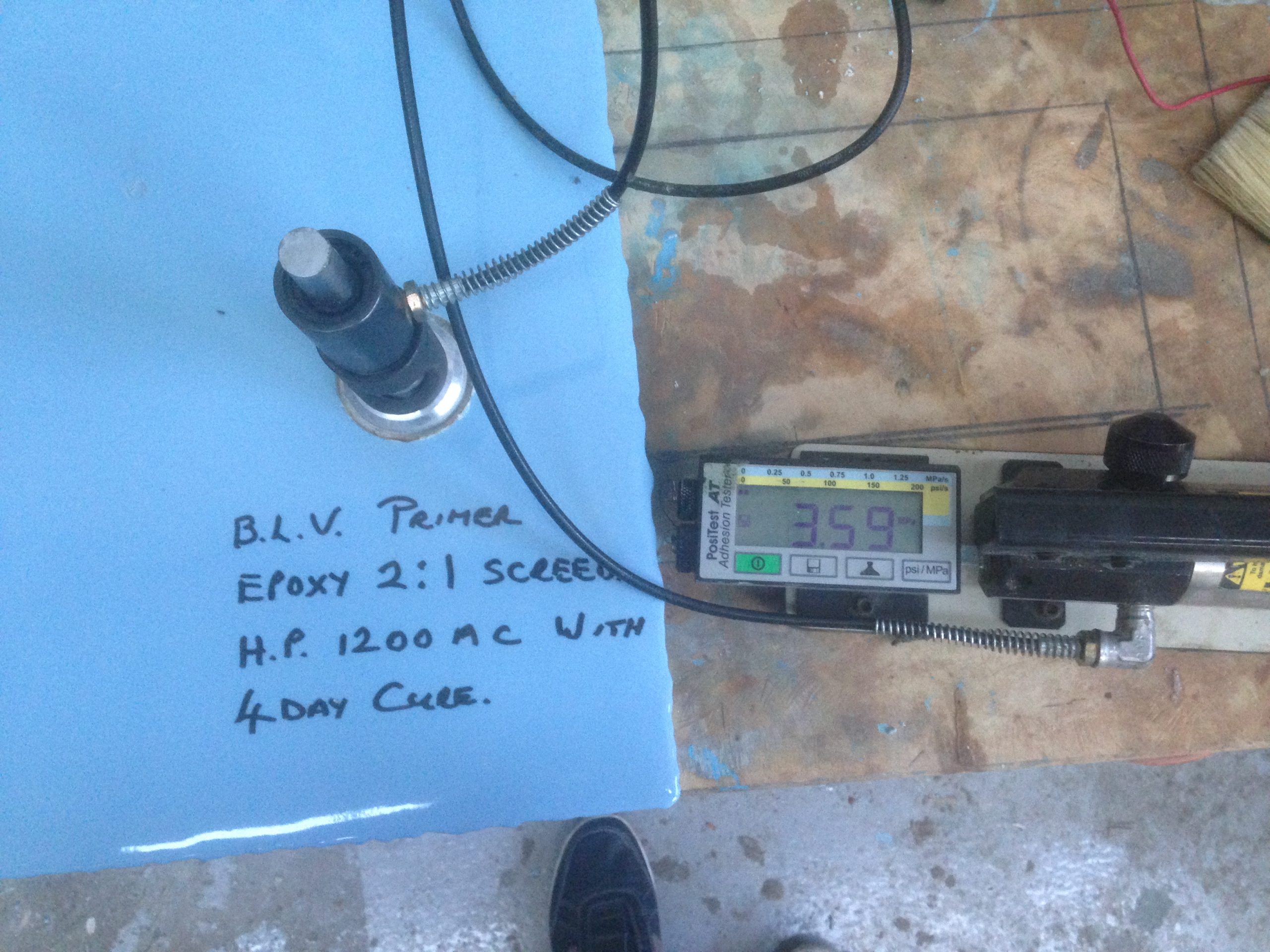
Membrane adhesion across the entire substrate
-
Compliance with the specified dry-film thickness
-
Correct primer selection or application
-
Adequate preparation beneath the membrane
-
Long-term movement capacity
-
Future drainage performance
-
Resistance to damage from following trades
-
Suitability of every concealed termination
-
Performance after screeds, pedestals or landscaping are installed
A membrane may retain water and still contain areas of insufficient thickness, poor adhesion or incomplete detailing that have not yet developed into an observable leak.
Compliance involves more than testing
External above-ground waterproofing is addressed through two related standards.
AS 4654.1:2012 sets out material-performance requirements for external above-ground waterproofing membranes. AS 4654.2:2012 addresses the design and installation of those systems.
Together, they establish a framework that extends beyond the membrane material itself. Falls, drainage, joints, penetrations, terminations, substrate condition, protection and installation all influence the performance of the finished podium.
A flood test should therefore supplement the project’s compliance and quality-assurance process not replace it.
The project specification must also identify whether flood testing, electronic leak detection or another integrity-testing method is required. These tests are not interchangeable, and each has practical and technical limitations.
Begin with the substrate
For a fully bonded membrane, substrate acceptance is one of the most important hold points.
The current Enviro HP1200 technical data requires defective substrate to be removed, laitance to be eliminated and concrete to be mechanically prepared to a recommended minimum CSP3 profile. It also identifies concrete curing and substrate-moisture requirements.
Before priming, the inspection should confirm:
-
Surface strength and integrity
-
Concrete age and moisture condition
-
Removal of contamination and laitance
-
Treatment of cracks and construction joints
-
Completion of falls toward drainage points
-
Correct installation of hobs and plinths
-
Adequate space around penetrations
-
Drain and overflow locations
-
Compatibility of adjoining materials
These conditions cannot be verified by a flood test after the membrane has been applied.
If the substrate was unsuitable before application, the fact that the membrane temporarily held water does not correct the underlying risk.
Thickness needs its own evidence
Enviro HP1200 is a two-component, spray-applied hybrid polyurethane membrane used for applications including podiums, rooftops, car parks, stadiums and planter boxes.
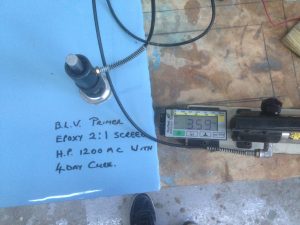
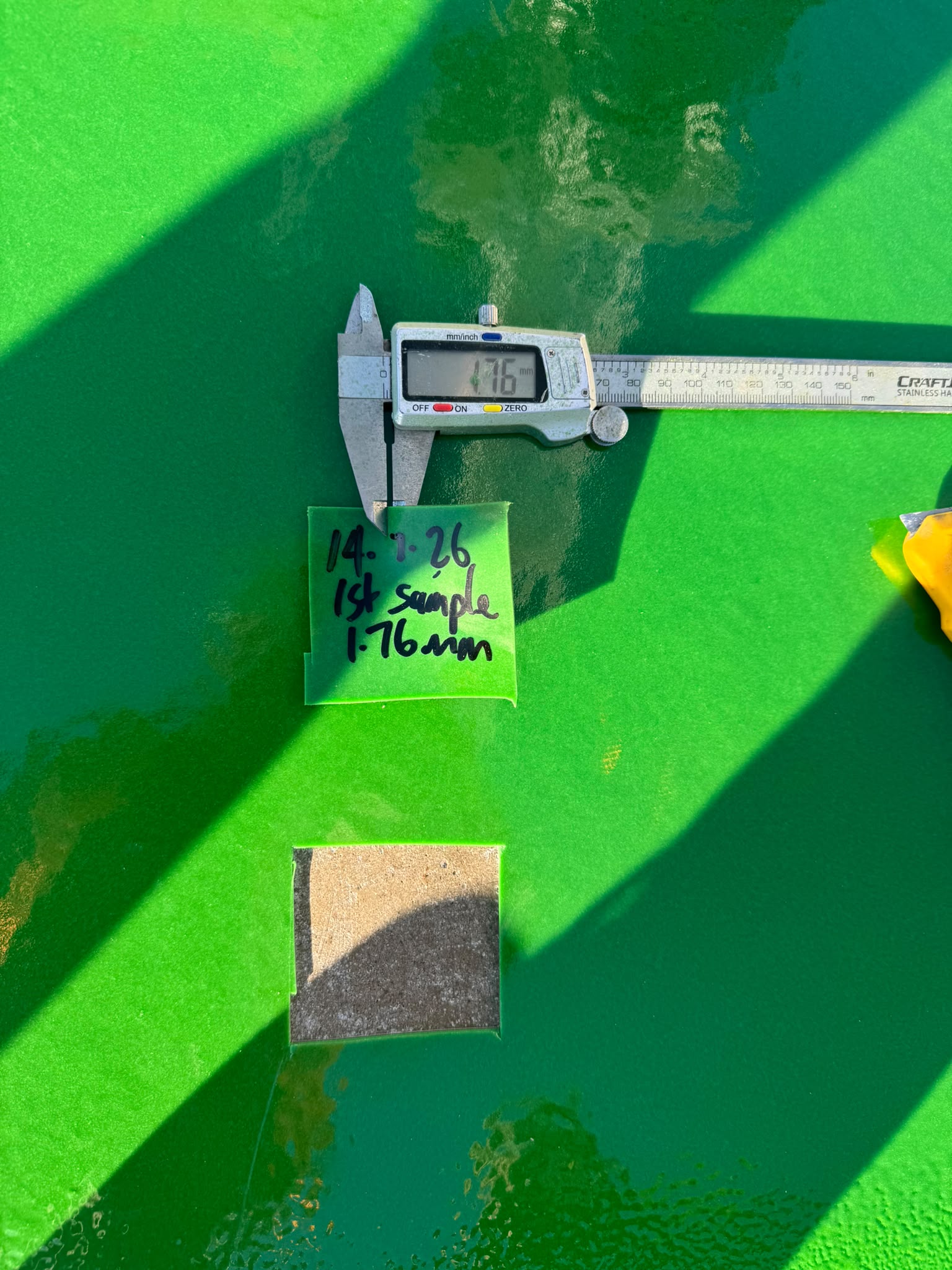
The current technical data recommends a 1.5 mm dry-film thickness for external applications. A project-specific specification may require a different build-up depending on exposure, traffic, detailing or system design.
For spray-applied systems, thickness control should be planned rather than inferred from appearance.
The project QA plan may include:
-
Material consumption reconciliation
-
Recorded application areas
-
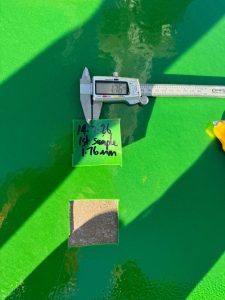
Wet-film or dry-film verification where appropriate
-
Test coupons or other approved measurement methods
-
Spray-equipment records
-
Batch and installation traceability
-
Inspection of localised details and vertical returns
The appropriate verification method should be agreed before application. Testing that damages the completed membrane requires an approved repair procedure and reinspection.
A flood test may identify a through-defect. It does not provide a thickness map.
Podium risk concentrates at interfaces
Large open areas are usually easier to spray and inspect than the edges and interruptions within them.
Particular attention is required at:
-
Drains and overflows
-
Door and window thresholds
-
Hobs, plinths and parapets
-
Columns and wall junctions
-
Pipe, cable and sleeve penetrations
-
Balustrade or façade interfaces
-
Construction and movement joints
-
Changes between exposed and protected systems
-
Transitions into planter boxes
-
Staged membrane tie-ins
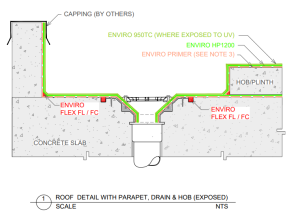
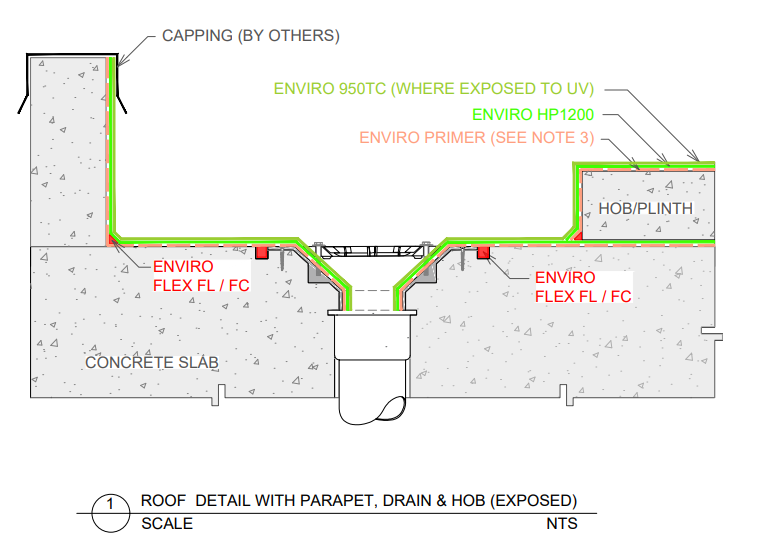
Envirosystems provides typical HP1200 details for protected drains, slab penetrations, thresholds, planter boxes and other common interfaces. These drawings are suggested methodologies and must be coordinated with the project design, specification and adjoining construction.
A typical detail cannot resolve an incompatible threshold height, an incorrectly positioned drain or services installed too close together. Those remain design and coordination matters.
Flood testing carries its own risks
Water is heavy. A flood test introduces temporary dead load to the structure and lateral pressure against temporary dams, hobs and perimeter elements.
The structural capacity and proposed water depth should therefore be reviewed before testing. Drainage points and overflows must also be managed so the test does not create unintended water damage.
The membrane should have reached the manufacturer-approved condition before testing begins. The current HP1200 technical data states that full cure depends on temperature and relative humidity and may take five to seven days. The required waiting period before a particular integrity test should be confirmed with Envirosystems and documented in the project procedure.
Testing too early may place unnecessary stress on uncured primers, sealants, details or adjoining materials.
Electronic testing is not automatically the answer
Electronic leak detection can locate breaches that may be difficult to identify through flood testing. However, the method must be compatible with the membrane assembly.
Different techniques require different conditions, potentially including:
-
A suitable electrically conductive substrate or grounding medium
-
Direct access to the membrane
-
A dry or wetted test surface, depending on the method
-
Continuity of the test area
-
Appropriate detailing around penetrations and terminations
-
Trained testing personnel
Overburden, insulation, drainage components and landscaping can also affect which method remains practical.
Electronic leak detection should therefore be designed into the assembly and QA plan. It should not be added at the end of construction without confirming that the system can be tested reliably.
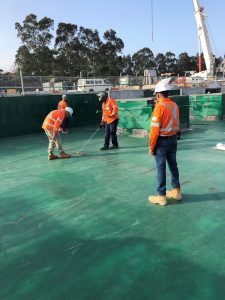
Passing the test does not protect the membrane from construction
Many podium defects occur after the membrane has been inspected.
Steel feet, scaffold components, stored materials, dropped tools, sharp drainage cells, unprotected pedestals and later penetrations can all damage the completed system.
Before covering the membrane, the project team should confirm:
-
All repairs have been completed and retested where required
-
Temporary protection has been removed without damage
-
Permanent protection is compatible with the membrane
-
Pedestals incorporate the specified cushioning or separation layer
-
Drainage paths remain open
-
The overburden will not rigidly bridge movement joints
-
Following trades understand restrictions on drilling and fixing
-
Photographic records have captured concealed details
Envirosystems’ protected paver details, for example, identify a soft rubber base or cushioning layer beneath pedestals. This illustrates an important principle: the membrane must be protected from concentrated bearing and abrasion after installation.
The release-to-cover hold point
For complex podiums, “membrane complete” should be a formal release point rather than an informal instruction to the next trade.
The release package should bring together:
-
Approved design and system details
-
Substrate acceptance records
-
Primer and membrane application records
-
Thickness or consumption evidence
-
Inspection of joints, drains and terminations
-
Integrity-test results where specified
-
Repair and retest records
-
Protection and overburden methodology
-
Photographs of concealed interfaces
-
Authorisation to proceed with covering works
No single item proves system performance. Together, they create a defensible record that the podium was designed, installed, inspected and protected as a complete waterproofing assembly.
Key takeaway
Passing a flood test is useful but it should never become shorthand for:
“The waterproofing is compliant and ready to cover.”
A durable podium depends on substrate preparation, membrane thickness, adhesion, detailing, drainage, testing, protection and construction sequencing working together.
Once the membrane is concealed, the quality of that evidence becomes almost as important as the membrane itself.
When your project releases a podium for covering, is the decision based on one test result or on a complete waterproofing QA record?

HP1200 AC
Aquatic Centre Lap Pool Re-Surfacing
Gallery
Products Used


Enviro Epoxy B-LV
- Exceptional Versatility
- Long-Lasting Protection in Demanding Environments
- Superior Adhesion Across Challenging Surfaces


