
 Adhesives
 Coatings
 Flooring
 Primers
 Remedial
 Sealants
 Accessories
 Waterproofing
Below-grade waterproofing often begins with a product question:
“What membrane should we use?”
But the more important question comes first:
“From which side will the water pressure act, and when can the waterproofing system be installed?”
A membrane installed on the face first exposed to groundwater is working under positive pressure. Water pressure generally pushes the membrane towards the structure.
A membrane installed internally is working under negative pressure. Water reaches or passes through the structure before acting against the waterproofing layer.
Both approaches can be technically appropriate. They are not interchangeable, and a negative-side treatment should not automatically be treated as a substitute for a positive-side waterproofing system.
Begin with the water – not the membrane
The below-grade design should establish the expected water conditions before selecting the waterproofing build-up.
That assessment should consider:
- Groundwater level and seasonal variation
- Perched water and site drainage
- Expected hydrostatic head
- Soil permeability and contaminants
- Basement depth and intended use
- Construction sequence and available access
- Retaining-wall and structural arrangement
- Construction and movement joints
- Penetrations, piles and temporary supports
- Consequences of water ingress
- Accessibility for future investigation and repair
A basement car park, hospital lift pit, rail tunnel and below-ground electrical room do not carry the same consequence of failure.
The waterproofing strategy should reflect both the exposure and what the structure is protecting.
Positive-side waterproofing prevents water entering the structure
Positive-side waterproofing is installed on the side first exposed to the water source.
For a basement wall, this is generally the soil side. For an under-slab system, it is beneath the concrete structure.
Its principal advantage is that water is stopped before it enters the structural element. However, there is no single positive-side system suitable for every below-ground project.
Construction sequence and access significantly influence which system can be used.
Within the Envirosystems range, three different positive-side approaches include:
- Enviro BSM pre-applied blindside membrane
- Enviro BSL fully welded tunnel and basement liner
- Enviro HP1200 spray-applied waterproofing membrane
Each performs a different role.
Enviro BSM: pre-applied and bonded to the concrete
Click here for further information on Enviro BSM
Enviro BSM is a pre-applied composite HDPE sheet membrane intended for blindside concrete slabs and walls.
It is installed before the concrete is poured and incorporates a surface designed to bond to the newly placed concrete.
This fully bonded arrangement helps restrict lateral water migration between the membrane and the structure. If local damage occurs, water should not have an unrestricted pathway behind the system across a larger area.
This approach is particularly relevant where the waterproofing must be installed before reinforcement and concrete placement and external access will not be available later.
Performance depends on continuity at:
- Sheet laps
- Pile and service penetrations
- Slab-to-wall transitions
- Lift-pit steps and corners
- Construction joints
- Temporary supports
- Terminations
- Connections to subsequent waterproofing systems
The field sheet may cover most of the area, but these interfaces determine whether the structure is actually encapsulated.

Enviro BSM Installed under steel reinforcement ready for concrete pour
Enviro BSL: a fully welded and compartmentalised liner
Click here for further information on Enviro BSL
Enviro BSL is a fully welded VLDPE lining system developed for tunnels, major basements and other high-risk underground structures.
Unlike a bonded spray membrane, BSL forms a continuous liner between structural layers. Its seams are heat welded, allowing the installed liner to be tested and verified before it is permanently concealed.
The system can also be divided into defined waterproofing compartments using welded waterstops and separation strips. Injection ports or hose systems can then provide access to individual compartments after construction.
This changes the approach to long-term risk.
Rather than treating the entire underground structure as one inaccessible waterproofing area, compartmentalisation allows a potential ingress location to be isolated. Targeted resin injection may then be undertaken within the affected zone without attempting to remediate the entire liner.
This type of system is particularly relevant where:
- Sustained groundwater pressure is expected
- The structure is large or geometrically complex
- Future access to the external face will be impossible
- Localisation of potential ingress is important
- The asset requires a defined remediation strategy
- Weld testing and installation verification are required
The system still depends on carefully designed transitions, penetrations, waterstops, terminations and construction joints. Compartmentalisation provides redundancy and maintainability; it does not compensate for incomplete detailing.

Enviro HP1200: a fully bonded, seamless spray-applied option
Click here for further information on Enviro HP1200
Where the positive face of the basement or retaining structure is accessible after concrete placement, a spray-applied system may provide another solution.
Enviro HP1200 is a two-component, spray-applied, solvent-free elastomeric waterproofing membrane. When applied to a suitably prepared and primed concrete substrate, it forms a seamless, fully bonded membrane.
For below-grade basement applications, this can provide practical advantages around:
- Complex geometry
- Pile caps and footings
- Penetrations and service entries
- Wall-to-slab transitions
- Retaining walls
- Construction interfaces
- Changes in substrate profile
Because the system is fully bonded, it can help restrict water tracking between the membrane and the concrete. Its rapid-cure application can also assist the construction programme where protection and backfilling need to follow promptly.
However, spray application does not remove the need for preparation or detailing.
The concrete must be assessed for moisture, laitance, contamination, cracking, defects and surface profile. Primer selection must respond to the actual substrate and site conditions. Movement joints and active cracks require separate treatment, and the membrane must be protected from damage during backfilling and following works.
The correct spray-applied system build-up must therefore be confirmed against the anticipated groundwater pressure, substrate, access and protection arrangement.

Construction exposure is part of the design
Positive-side systems are installed before being permanently concealed.
Depending on the selected system, they may be exposed to:
- Reinforcement installation
- Formwork activities
- Construction traffic
- Welding and hot works
- Concrete placement
- Protection-board installation
- Drainage-cell installation
- Backfilling and compaction
A membrane being described as trafficable or durable does not mean it is immune to construction damage.
Quality assurance should include:
- Acceptance of the substrate or blinding
- Inspection of seams, laps and welds
- Verification of membrane continuity
- Recording of penetrations and repairs
- Inspection before reinforcement or protection conceals the system
- Final inspection before concrete placement or backfilling
- Photographic records of completed details
- A controlled method for repairing damage
Once the waterproofing is concealed, investigation and repair become significantly more difficult.
Click here for – Waterproofing Below Ground, Basement and Tunnels – Envirosystems
Click here for – Lift Pits, Stair Cores and Footings – Envirosystems
Negative-side waterproofing works under different mechanics
Negative-side waterproofing is installed on the face opposite the water source.
This may be necessary because external access is unavailable, the structure already exists or water ingress must be treated from inside a basement, lift pit, tunnel or tank.
The key difference is that water pressure acts through the substrate and against the rear of the waterproofing barrier. The system must resist separation from the concrete or masonry.
The substrate therefore becomes part of the waterproofing system.
Weak concrete, laitance, contamination, delamination, active cracks or poorly repaired junctions can compromise performance regardless of the product’s laboratory pressure rating.
Where Hydrostatic 1 and Enviro Shield fit
Click here for further information on Enviro Hydrostatic 1

Enviro Hydrostatic 1 is a polymer-modified cementitious membrane documented for both positive- and negative-pressure applications.
Its technical data specifies different membrane thicknesses for:
- General positive-side waterproofing
- Immersed or precautionary negative-side waterproofing
- Preventing water ingress under negative pressure
This distinction is important: the required build-up changes with the exposure.
Enviro Shield is a two-component, water-based epoxy hydrostatic barrier. It can also function as a moisture-tolerant primer beneath compatible Envirosystems membranes.
Depending on the project, it may therefore operate as the hydrostatic barrier itself or form part of a layered waterproofing system.
Neither product should be selected solely by comparing maximum pressure ratings. Cementitious and epoxy barriers have different preparation, application, vapour and overcoating requirements.
Click here for further information on Enviro Shield
Active leakage must be stabilised first
A frequent remedial mistake is applying a waterproof coating directly over visible leakage.
Running water can prevent adhesion, wash out uncured cementitious material or create pathways behind the new coating.
Localised active flows may first require chasing and plugging with a rapid-setting product such as Enviro Plug. Cracks, joints and penetrations must then be treated according to whether movement is expected.
A rigid plug may stop an active leak, but it does not convert a moving joint into a static joint.
Likewise, applying a coating over a crack does not establish whether that crack is dormant or active.
The key takeaway
Positive-side and negative-side waterproofing are not simply competing product categories.
They respond to different pressure directions, construction sequences, access constraints and project risks.
Positive-side systems may include:
- A pre-applied membrane bonded to newly placed concrete
- A fully welded and compartmentalised tunnel liner
- A seamless spray-applied membrane bonded to accessible concrete
Negative-side systems resist water after it has reached or passed through the substrate.
The best design may use one approach or a coordinated combination but it should always begin with groundwater, structure, construction sequence and consequence of failure.
Select the system around the structure
Positive-side and negative-side waterproofing are not interchangeable product categories. The right approach depends on water pressure, construction sequence, substrate access, structural movement, detailing interfaces and the consequences of leakage.
Envirosystems offers several technologies for below-grade construction including Enviro BSM pre-applied membrane, Enviro BSL welded liner systems, Enviro HP1200 spray-applied waterproofing and Enviro Hydrostatic 1 for suitable hydrostatic conditions. Each performs a different role, and final selection should be based on the complete waterproofing strategy rather than a single product property.
Explore the Envirosystems below-ground waterproofing systems and supporting technical documentation or speak with our technical team when the project conditions require a system-specific assessment.

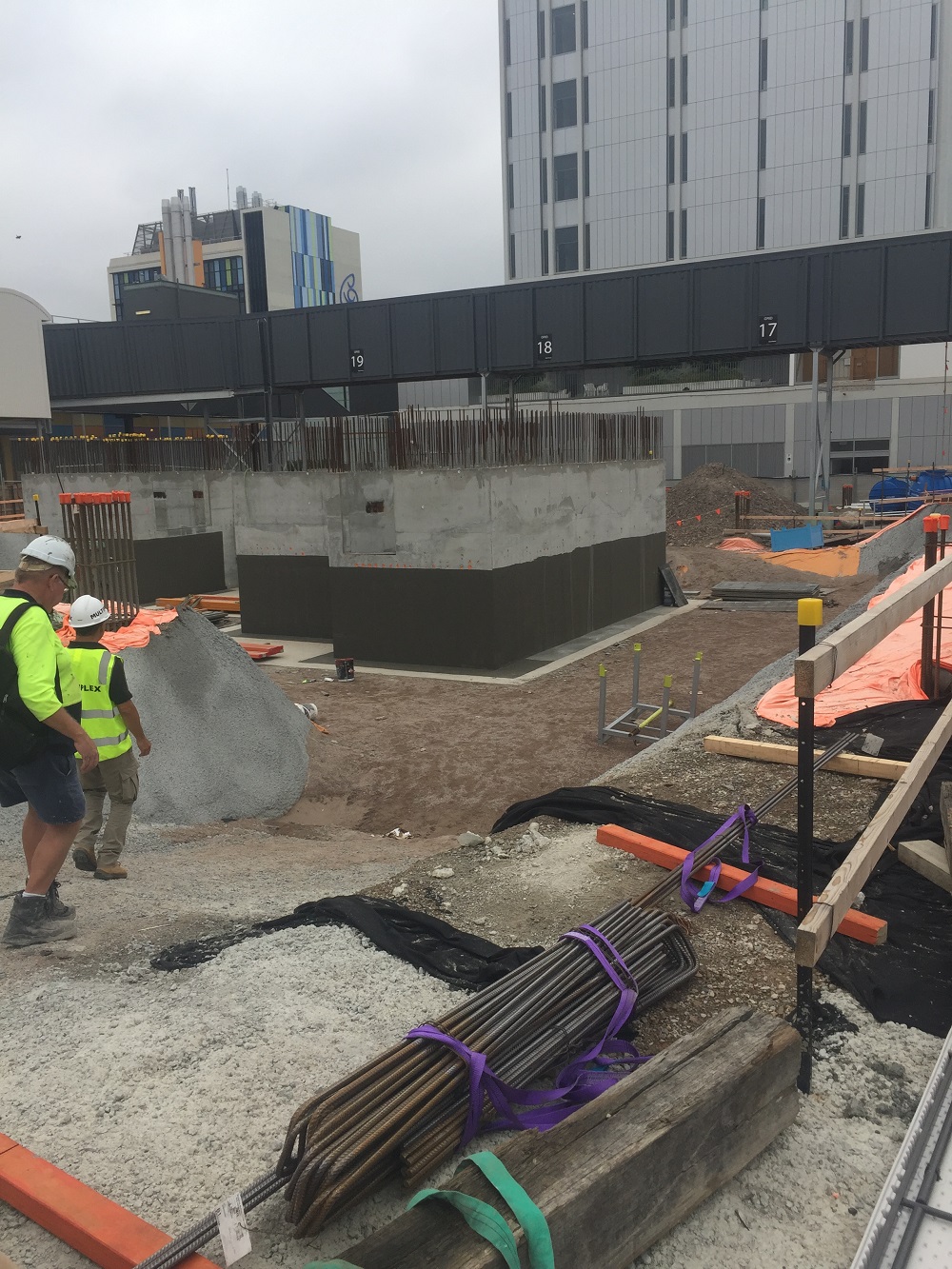
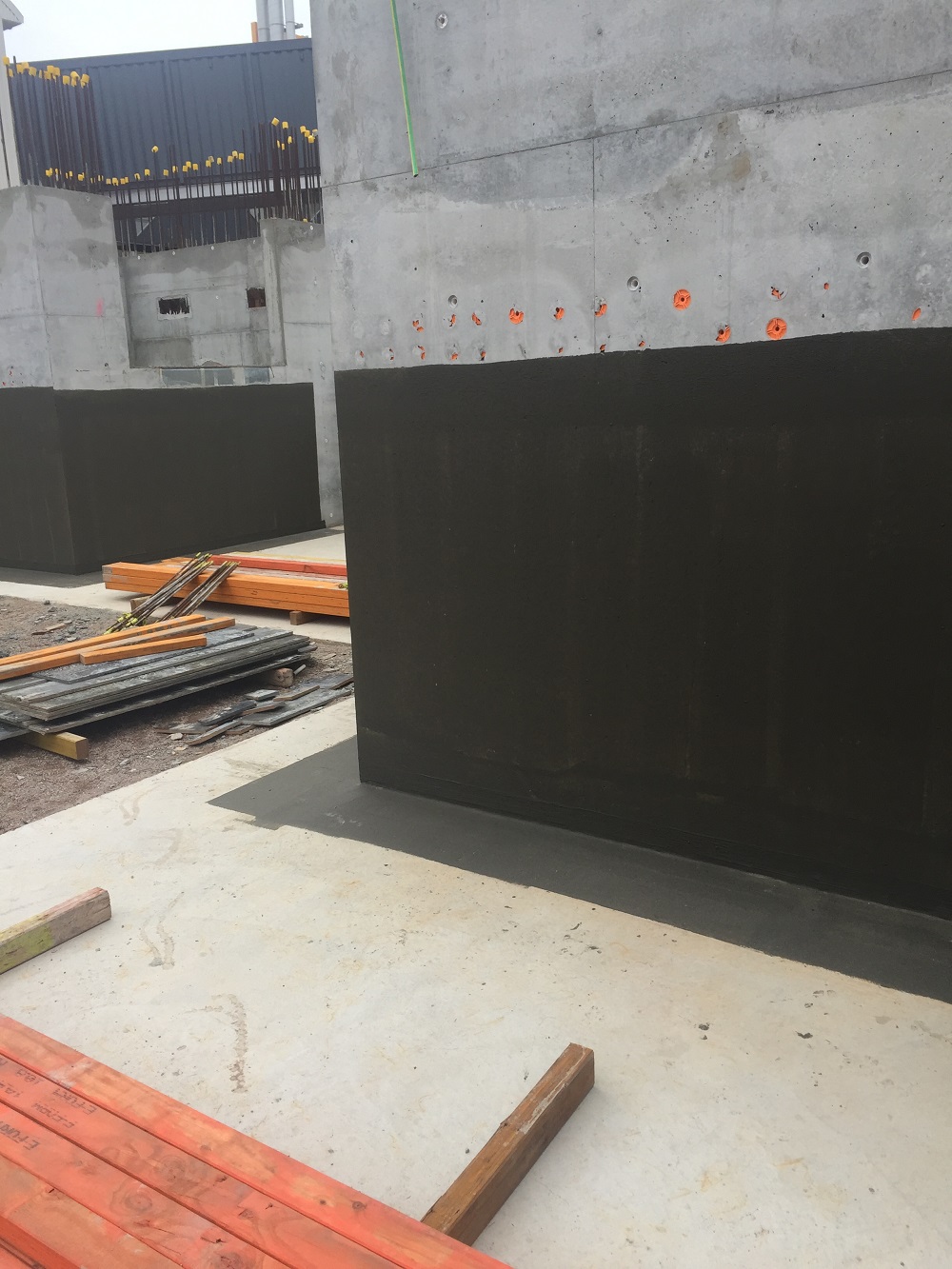
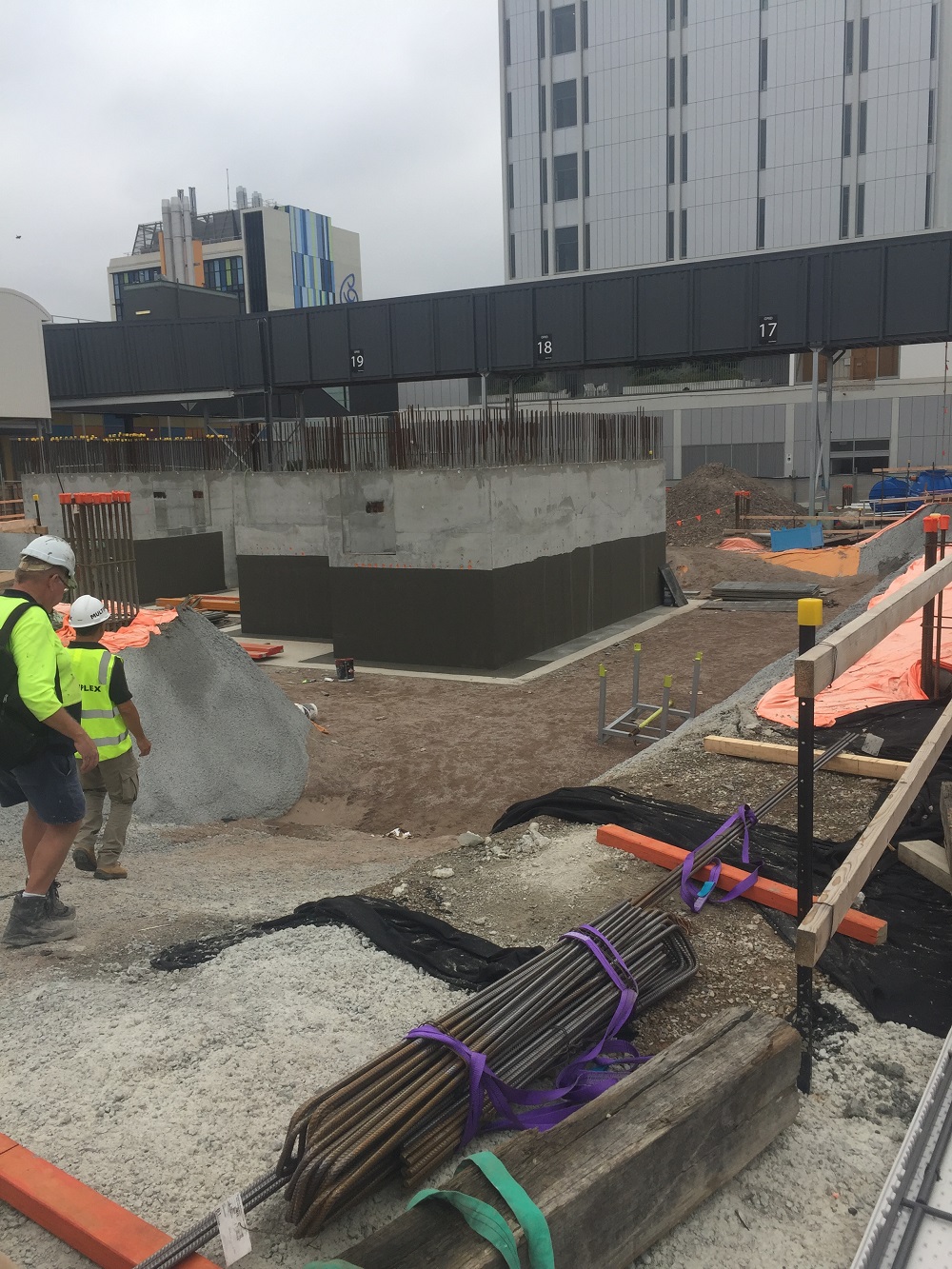
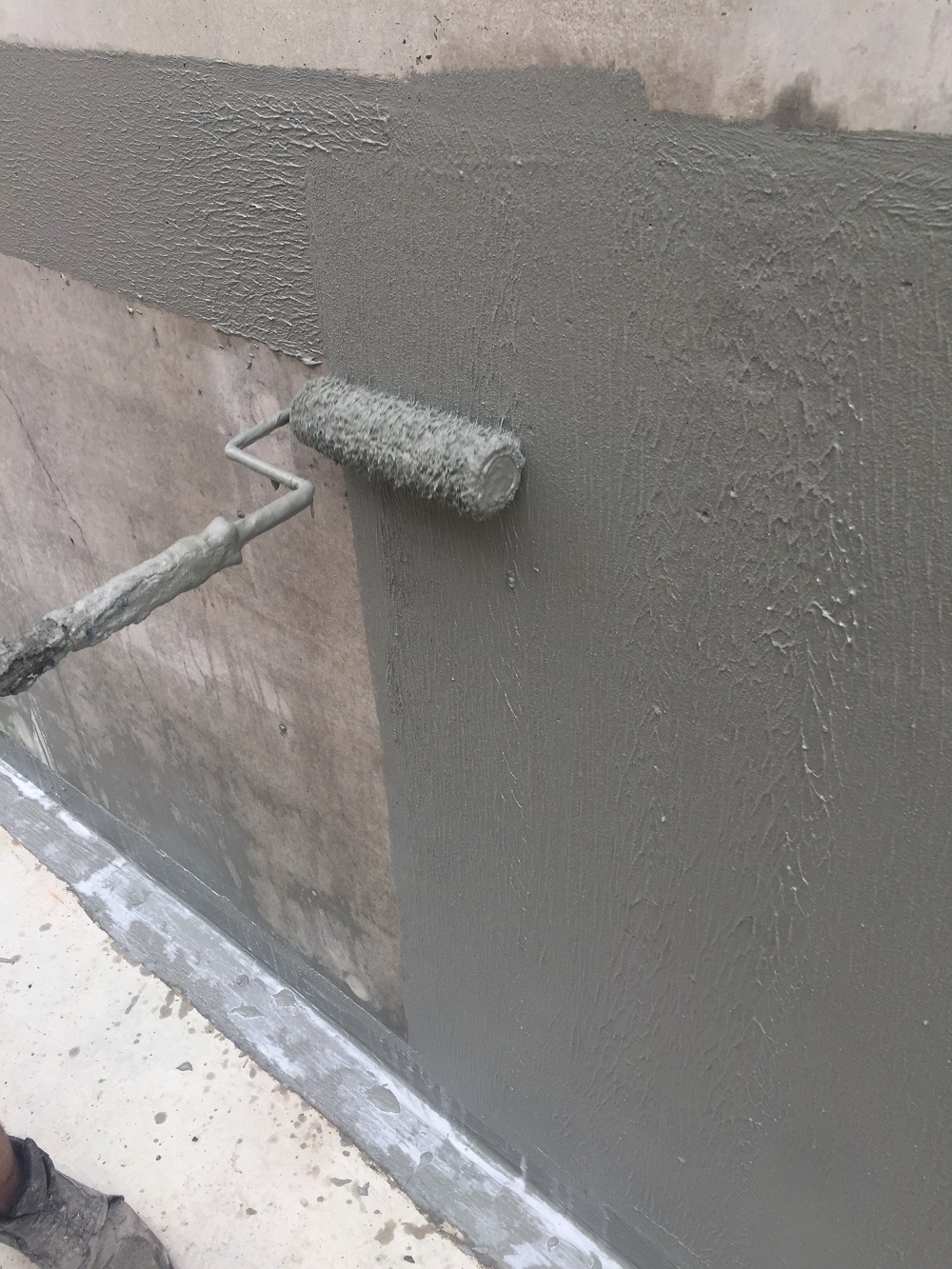
Enviro Hydrostatic 1
Applied to lift pit external positive side
Gallery


Products Used


Enviro BSM
- Blind side fully bonded membrane
- Chemical & gas resistant
- Fully adhered lap joints

